
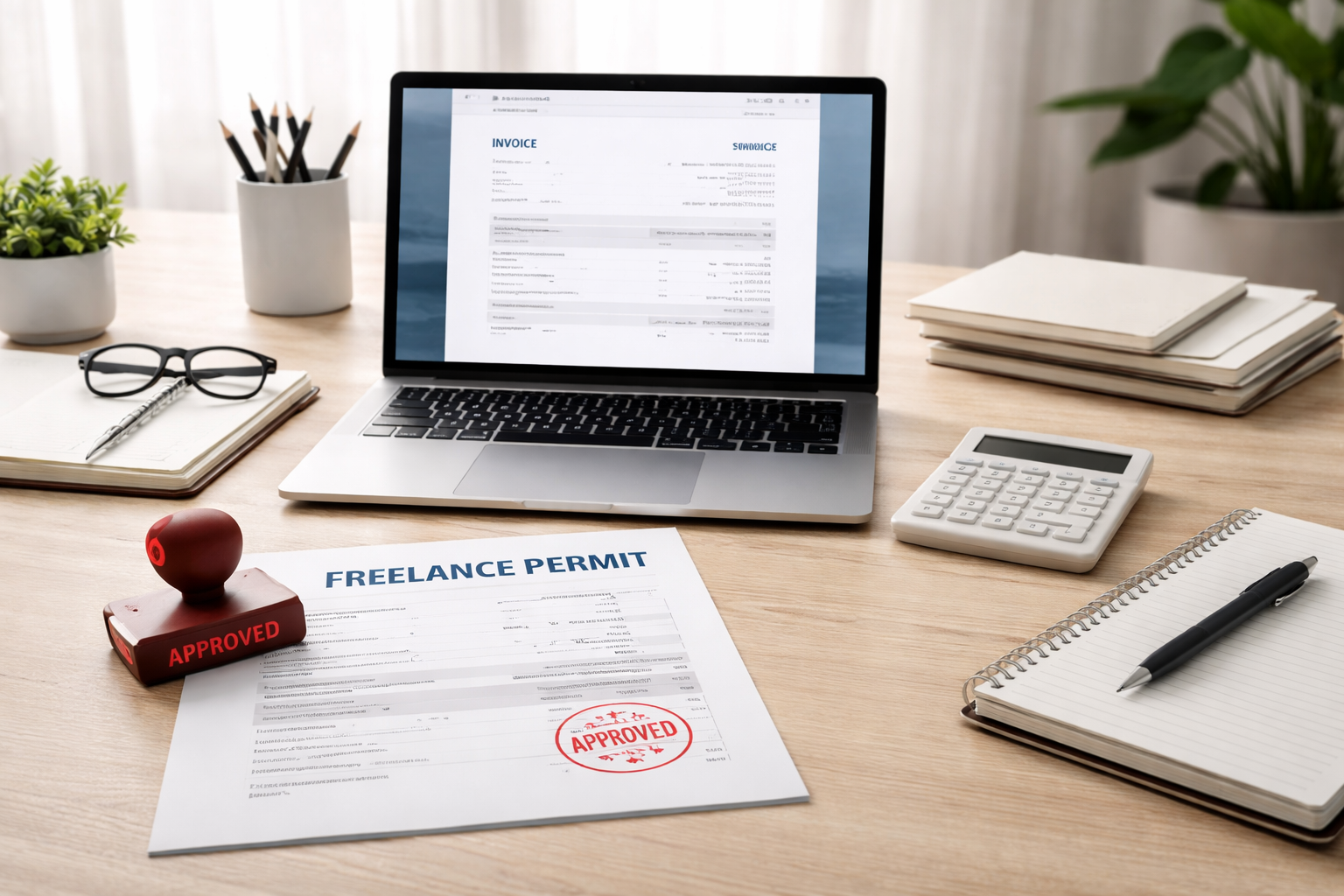

The UAE has quietly become one of the most freelancer-friendly countries in the world. Designers, consultants, developers, marketers, coaches, writers, and independent professionals across dozens of industries are choosing to work legally and independently from the Emirates. Strong infrastructure, a tax-friendly environment, and clear licensing frameworks have made freelancing in UAE a practical long-term career option rather than a temporary workaround.
At the same time, the rules matter. Freelancers who operate without the right permit, misunderstand income regulations, or delay setting up banking and visas often face unnecessary stress later. A proper legal setup from day one is what allows freelancers to focus on clients, income, and growth instead of compliance problems.
This freelancer UAE guide explains how legal freelancing works, how to set yourself up correctly, and how to manage income confidently once you are licensed.
Freelancing in UAE refers to working independently under your own name rather than being employed by a single company. Instead of a traditional employment visa sponsored by an employer, freelancers operate under a freelance permit or license issued by a free zone or authority.
A freelancer is legally allowed to invoice clients, sign contracts, open a bank account, and earn income in approved activities listed on the permit. This applies whether clients are based inside the UAE or internationally.
Unlike informal remote work, freelancer UAE regulations are structured and enforceable. Authorities treat freelancing as a legitimate business activity, which is why the correct license, visa status, and compliance steps are essential.
Several factors make freelancer UAE setups appealing compared to other countries. The most obvious is tax efficiency. There is no personal income tax on freelance earnings, and many freelancers operate without VAT registration depending on turnover and services.
The UAE also offers long-term residency options, reliable banking, global connectivity, and strong client demand across sectors like media, tech, education, consulting, and e-commerce.
Just as important is clarity. The UAE does not leave freelancers in a grey area. Once licensed, the legal position is clear and enforceable, which provides stability for both freelancers and their clients.
Freelancing in UAE is only legal if you hold an approved freelance permit or license. Working on a tourist visa, dependent visa, or standard employment visa without authorisation is not permitted.
There are two main legal structures freelancers use.
The first is a freelance permit issued by a free zone authority. This is the most common option and suits the majority of independent professionals. It allows you to operate under your own name and offer specific services aligned with your activity.
The second is operating through a sole establishment or professional license. This is less common for first-time freelancers and usually suits those scaling into a broader consultancy model.
For most people starting out, a freelancer UAE permit through a recognised free zone provides the fastest and most cost-effective route.
Every freelance permit is issued for specific activities. This is one of the most misunderstood aspects of freelancing in UAE.
Activities are not generic. For example, “marketing” and “social media management” are different categories. “Software development” is not the same as “IT consultancy.” You can only legally invoice for services that fall under your approved activities.
Choosing the wrong activity can lead to issues with clients, banks, or immigration later. It can also limit the type of contracts you are allowed to sign.
A proper freelancer UAE setup starts with mapping your actual services to the correct approved activity list before applying.
A freelance permit can be issued with or without a residence visa, depending on your situation.
If you already hold a valid UAE residence visa through a spouse or family sponsor, you may be able to obtain a freelance permit without changing your visa status. This is common and cost-effective.
If you do not have a UAE visa, you can apply for a freelance visa alongside your permit. This typically provides one to two years of residency, renewable as long as the permit remains active.
The freelance visa allows you to live in the UAE, rent property, obtain utilities, and access banking and healthcare like any other resident.
Opening a bank account is a critical milestone for freelancer UAE setups. While possible, it requires preparation and patience.
Banks in the UAE apply strict compliance checks, especially for independent professionals. You will typically need:
Some banks are more freelancer-friendly than others, and requirements change frequently. Digital banks and fintech options can sometimes offer faster onboarding, but traditional banks remain preferred for higher transaction volumes.
The key is alignment. Your bank account purpose, license activity, and income source must all match.
Once licensed, freelancers are free to earn income from UAE-based clients, international clients, or online platforms. Payments can be received in local or foreign currencies depending on your bank setup.
Invoices should always include your name, permit details, service description, invoice date, and amount. Clear invoicing not only looks professional but also protects you during audits or banking reviews.
Many freelancers operate with multiple income streams, such as retainer clients, project-based work, and digital services. As long as all income aligns with your licensed activity, this is permitted.
VAT is one of the few tax-related areas freelancers must actively monitor.
If your taxable supplies exceed the mandatory VAT registration threshold, registration becomes compulsory. Some freelancers register voluntarily depending on their client base and services.
Not all freelance services are VAT taxable, especially when dealing with overseas clients. However, assumptions can be risky. VAT treatment depends on the nature of the service and the client’s location.
Understanding whether VAT applies to your freelance income is essential to staying compliant while avoiding unnecessary registration.
Freelancers new to the UAE often repeat the same mistakes.
One is working without a permit while waiting for setup to complete. Another is choosing the cheapest license without checking whether the activity fits their services. Many also delay opening a bank account until clients are ready to pay, causing income bottlenecks.
Some freelancers underestimate renewal timelines or forget that permits and visas must be renewed annually. Others mix personal and freelance income without proper records, which can complicate banking reviews.
Avoiding these mistakes comes down to planning the freelancer UAE setup properly from the start.
A freelance permit is ideal for solo professionals, but it can also be a stepping stone. Many freelancers later upgrade to a company license, hire staff, or expand services.
The advantage of starting as a freelancer in UAE is flexibility. You can test the market, build income stability, and upgrade only when needed.
A well-structured freelance setup makes that transition smooth, because your legal and financial history is already compliant.
Navigating freelancing in UAE is easier with guidance. License rules, activity lists, visa policies, and banking requirements change regularly.
Easy Freelancer Dubai supports freelancers with end-to-end setup, including activity selection, permit applications, visa processing, renewals, and compliance advice. The focus is on building a setup that works not only today, but also as your freelance income grows.


.svg)

.svg)